Postpartum · 9 min read
C-section recovery exercises: a week-by-week guide to safely getting strong again
C-section is major abdominal surgery. The standard "6 weeks and you're cleared" advice undersells what your body just went through. Here's a real recovery timeline.
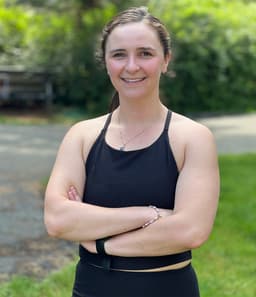
By Lexi Krieger · NASM-CPT, Pre/Postnatal Performance Specialist · May 15, 2026

Roughly 1 in 3 U.S. births is a C-section. And yet most postpartum exercise content treats vaginal delivery as the default and lumps C-section in as an afterthought. That's wrong.
A C-section is major abdominal surgery — your surgeon cut through skin, fascia, muscle, peritoneum, and uterus to deliver your baby, and then stitched all of it back together. The recovery timeline isn't "a little longer than vaginal" — it's a different timeline with different priorities.
Weeks 0-2: scar protection + breath
You just had surgery. The job in these weeks is wound healing, not exercise.
- Walk — to the bathroom, to the mailbox, around the kitchen. Walking is the single best thing you can do this early.
- Diaphragmatic breathing — 3-5 minutes a day. Lying down, hand on chest, hand on belly. Gentle inhale, gentle exhale. This is rebuilding the breath-core connection that the surgery interrupted.
- Logroll out of bed (roll to side first, push up with arms). Don't sit straight up. Your scar will tell you why.
- Don't lift anything heavier than your baby for ~6 weeks. Yes, that includes laundry baskets.
Weeks 2-6: gentle re-engagement
Pain is decreasing. You're sleeping in approximately 90-minute chunks. The scar still has restrictions and you may have numbness or tingling above/below it.
- Continue walking — increase a few minutes at a time. Posture matters: pull shoulders back, breathe into the belly.
- Scar mobility (around weeks 4-6, once the surface has healed): gently massage in small circles around the scar (not on it yet) to prevent adhesions. Your OB or a pelvic floor PT can teach you specific scar release.
- Pelvic tilts — lying down, knees bent, slowly tilt your pelvis to flatten your low back, then release. 10 reps, 1-2x/day.
- Glute bridges — feet flat, push through heels to lift hips. Don't worry about how high. 10 reps.
- Gentle transverse abdominis activation — exhale, draw the lower belly toward the spine without engaging through the scar.
Weeks 6-12: cleared and starting to rebuild
Your OB has cleared you (probably at 8-12 weeks for a C-section, sometimes later). Now is when most postpartum exercise content tells you to "just start." Don't.
C-section recovery in this window has two priorities: scar mobility (so the tissue moves with you) and deep core reactivation (the muscles that were physically cut need to be retrained how to fire).
What to add
- Bodyweight strength: squats (start with a sit-to-stand from a chair), glute bridges, modified planks (from knees with elbows elevated), dead bugs (carefully, watching for any pulling at the scar).
- Light loaded carries: hold a 5-15 lb weight in one hand, walk for 30-60 seconds. Switch sides. Trains anti-rotation core function.
- Postural work — rows, band pull-aparts. Postpartum + nursing posture is rounded forward. We counteract it.
- Continue scar mobility work daily. The scar that moves freely now is the scar that doesn't cause back pain at month 18.
What to avoid
- Crunches, sit-ups, twisting at the spine under load.
- Heavy lifting (anything you can't do without holding your breath).
- Running or jumping. Yes, even if you ran during pregnancy.
- Anything that pulls at the scar or causes scar discomfort.
Months 3-6: progressing to real strength
If your scar is mobile, your deep core is firing, and you're not getting any pulling sensations or weird symptoms — you graduate to loaded strength training.
- Full lower-body strength: goblet squats, RDLs, lunges, step-ups. Add load gradually.
- Push: incline press, push-ups. Push-ups from elevated surface first, dropping the surface lower as core capacity returns. Watch the abdominal wall for any doming or coning.
- Pull: rows, lat pulldowns. Critical for postpartum posture.
- Carries continue — they're the unsung hero of core function.
- Return-to-run protocol if you want, usually around month 5-6 with no pelvic floor symptoms and no scar discomfort. Graded — don't just go run.
When to see a pelvic floor PT
- Scar that's painful, raised, or restricted months after surgery
- Pelvic floor symptoms — leaking, heaviness, prolapse
- Back or hip pain that started after delivery and isn't resolving
- Numbness, tingling, or weird sensations around the scar that don't fade
- Adhesions or scar tissue you can feel under the skin
The thing nobody tells you
Most C-section moms train alongside their vaginal-delivery peers within 4-6 months and lift just as much weight by 12 months. Your starting line is different. Your finish line isn't.
How I program C-section recovery specifically
Every C-section client starts with a longer intake — scar assessment, deep core screen, and (if symptoms warrant) a referral to a local pelvic floor PT for scar work. The strength build follows, but the foundation comes first. See postpartum training, or DM me with where you are.