Postpartum · 8 min read
When can I exercise after giving birth? The honest postpartum timeline
The "6-week clearance" is the start, not the finish line. Here's what's actually safe at 2 weeks, 6 weeks, 3 months, and 6 months postpartum — and what each phase is for.
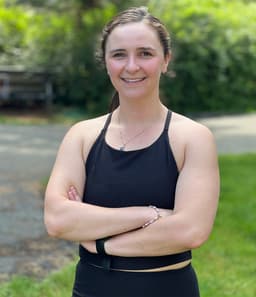
By Lexi Krieger · NASM-CPT, Pre/Postnatal Performance Specialist · May 4, 2026

The most common postpartum question I get: "When can I start working out again?" The most common answer in standard medical literature: "After your 6-week postpartum visit, if your OB clears you." Both are right. Both are also incomplete.
The 6-week mark isn't the moment you can go back to your old workouts. It's the moment you can start the slow work of getting back to them. Here's what each phase of postpartum is for, and what's actually safe.
Weeks 0-2: rest, recover, breathe
Your body just did the most physically demanding thing it will ever do. Don't "work out." Do this:
- Sleep when you can. Eat. Hydrate.
- Gentle walking — to the mailbox, around the block. Whatever feels okay.
- Diaphragmatic breathing, 5 minutes a day. Hand on chest, hand on belly. Breathe into the belly on the inhale, gently engage the deep core on the exhale.
- Pelvic tilts and very gentle bridges if you feel up to it after the first week.
Weeks 2-6: gentle reconnection
- Continue walking. Add a few minutes a day each week.
- Pelvic floor connection: learn to release on inhale, gently engage on exhale. Most postpartum moms over-grip from carrying tension — releasing is harder than engaging.
- Transverse abdominis activation: lying down, exhale and draw the lower belly toward the spine without flattening the low back.
- Glute bridges, clamshells, standing hip openers.
Weeks 6-12: cleared and starting to rebuild
After your 6-week OB clearance (and a diastasis recti screen — preferably with someone trained to do one), you can start gradual strength rebuilding. Not your pre-pregnancy program. Not "BBL Bootcamp." Real rehab.
- Bodyweight strength: squats, glute bridges, supported lunges, dead bugs (modified for diastasis), bird dogs, push-ups from elevated surface.
- Light dumbbell work: goblet squats, RDLs, rows, presses — all at very manageable loads.
- Walking briskly, hills if you want, low-impact cardio.
- No: running, jumping, plyometrics, heavy barbell lifts, sit-ups, crunches.
Months 3-6: returning to load
If your diastasis is closing, your pelvic floor isn't symptomatic (no leaking, no heaviness), and you're sleeping at least a little — you can start progressing weights.
- Full strength training: squats, deadlifts, presses, rows, carries. Watch the abdominal wall on every lift — any doming or bulging means regress.
- Return-to-run protocol if you want: usually around 12-16 weeks, with no leaking, no pain, no doming. Don't jump straight to running — there's a graded protocol (jogging in place → marching → light jogs → continuous running) that pelvic floor PTs use.
- Resume conditioning work: rowing, cycling, swimming. Plyometrics are last to come back.
Months 6-12: probably stronger than before
With a good program, by 6-12 months postpartum most women are at or above their pre-pregnancy strength. Your body has just been through the most intense physical adaptation it will ever do. Trained correctly, the postpartum body becomes a more capable body.
Special cases that extend the timeline
- C-section: Major abdominal surgery. Most providers want 8-12 weeks before any meaningful exercise, and core work waits longer. Scar tissue mobility matters.
- Severe diastasis (>3 finger-widths or deep gap): Need focused rehab before loading. Often warrants a pelvic floor PT.
- Pelvic floor symptoms (leaking, heaviness, prolapse): See a pelvic floor PT. These improve with the right work; ignoring them or training through them makes them worse.
- Breastfeeding + extreme fatigue: Not a contraindication to exercise, but your recovery capacity is limited. Reduce volume.
- Postpartum depression or anxiety: Exercise can help, but get support first. PSI has a great resource list.
How I actually program postpartum
If diastasis is affecting your movement, we can check at the first session. From there I usually program in two phases: a 4-8 week rehab phase (deep core, pelvic floor, glutes, breathing) and an ongoing strength phase that progresses as the body responds. See postpartum training, or DM me — happy to talk through your specific timeline.